Showing posts with label scoliosis. Show all posts

Wednesday, February 15, 2017

Can Scoliosis Affect Athletic Performance?

Scoliosis is a condition that is often feared by many, especially those who are physically active. Mostly idiopathic (or with unknown causes), scoliosis appears mainly in female teenagers. But can scoliosis really affect one’s sports performance?

Image source: active.com
Those with scoliosis may experience difficulty in moving than those with healthy spines. It can be a problem as mobility and flexibility play a big part in strenuous sports activities. Some individuals with scoliosis struggle to perform their best when it comes to athletics.

There are certain sports where scoliosis can cause health problems or injuries for the athlete. While it’s not necessary for individuals to quit a sport entirely, young athletes especially should be careful when training. Long-distance running can compress the spine, hyperextend the mid-back, or unevenly work the spine. This is why a lot of runners with scoliosis often complain that they experience difficulty in breathing and back pains as they perform tasks.

Image source: newyorktimes.com
But even if other physical activities should be limited, it should not be a hindrance for teenagers to stop doing sports altogether. After all, the right amount of physical movement can play a big role in successful scoliosis treatment.

Joseph Yazdi, M.D., is a physician at Tesson Heights Orthopaedic & Arthroscopic Associates, P.C. Read more about spinal health by visiting this blog.

Friday, August 19, 2016

The Early Warning Signs Of Scoliosis

As a spinal issue, scoliosis is a very challenging condition. Most scoliosis patients have attested how much the condition limits and immobilizes them in many ways, keeping them from having comfortable lifestyles. Here is a list of early warning signs of scoliosis, which may direct us to visit the doctor sooner rather than later:

Posture abnormalities: Any oddity in your general skeletal structure should be treated as a red flag. If you feel that you generally tend to lean forward or backward, or if you tend to appear as if you are favoring one side when you stand upright, get a doctor’s opinion.

Image source: en.wikipedia.org


Breathing difficulties: Scoliosis could be causing minor pains that people learn to tolerate, as if they were minor quirks, by shifting their bodily postures ever so subtly. This could provide relief, but truly this method is not without fault. Accommodating the pain results in breathing difficulties that are caused by the irregularity in posture.

Limping: Any limp, especially one that has been going on for a while, might just be a sign that points to scoliosis. When a spine has an irregularity, the body tends to shift to one side, causing a person to walk with a limp.

Image source: greathousechiropractic.com


It is best to note that there is very little that can be done to actually prevent scoliosis. It is a cold reality that a number of people are just destined to have it. However, its effects can be managed. Being aware of early warning signs could ensure that you do not have to go through the full scale of its discomforts.

Neurosurgeon Joseph Yazdi, M.D. is a seasoned medical practitioner who is familiar with the newest ways to manage scoliosis and other spine-related issues. Learn more about his expertise by following this blog.

Tuesday, June 28, 2016

What Causes Adult Degenerative Scoliosis?

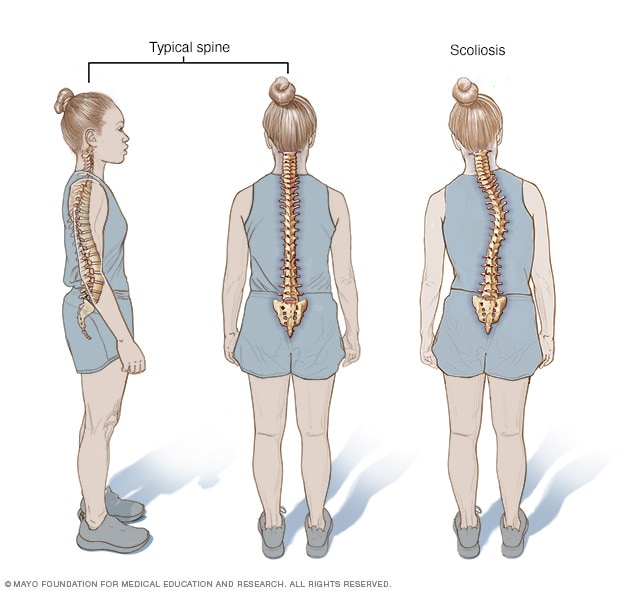
Image source: mayoclinic.org
Degenerative scoliosis is the curving of spine caused by the degeneration of the facet joints and the discs. This usually occurs to people over 65 years old.

Facet joint deterioration is similar to the causes of osteoarthritis. However, degenerative scoliosis causes a straight spine to shift. Because of this, the spine curves to just one side.

When scoliosis is discovered after puberty, it is already considered adult scoliosis. Its causes are different from that of scoliosis detected at an earlier age. Scoliosis in adults can be caused by other spinal conditions that affect the vertebrae. For instance, osteoporosis, osteomalacia (bone softening), or bone degenerations, could be the culprits. Adult scoliosis can also appear after a major spinal surgery.

Image source: linkedin.com
Degenerative adult scoliosis begins as a back pain. The degeneration occurring in the spine causes the curve to form. Those experiencing the condition could feel numbness, pain, and weakness in the lower back and leg portions of the body. In some cases, patients experience difficulty walking due to the pressure on the spinal nerves.

Surgery is not always the first option to treat adult degenerative scoliosis, but it can be required if the pain is severe or if the patient is experiencing breathing problems. Other treatment options include bracing, physical therapy, and medication for pain management.

Dr. Joseph Yazdi is a neurosurgeon with years of expertise in treating chronic spine conditions like failed back syndrome, scoliosis, and spinal fusion. Learn more about spinal injuries and other related medical issues by visiting this blog.