Monday, July 25, 2016

A Comparative Look At The Minimally Invasive Spine Surgeries

For those suffering from low back pain or radicular pain that may be caused by spine conditions, such as degenerative disc disease, herniated discs, or scoliosis, some options do not require major operative care.

http://wfdd-live.s3.amazonaws.com/styles/story-full/s3/images/story/Physical-Therapy-May-Help-For-Back-Pain-But-Time-Works-Best-448300847-1445796880.jpg?itok=YxDuSLnU
 Image source: wfdd.org

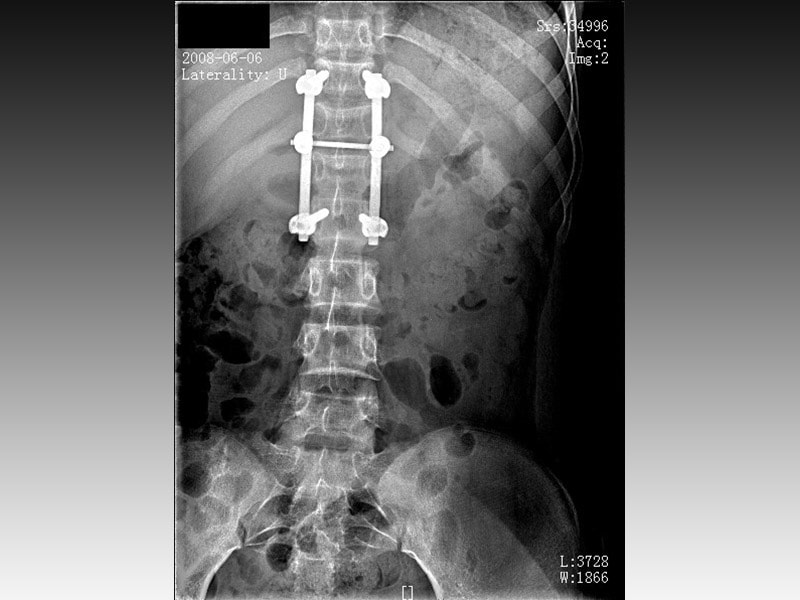
Minimally invasive spine surgeries involve fusing two or more vertebrae together using bone grafts either from the patient’s pelvic bone or a donor to add strength and stability to the spine. It is also considered only when extensive non-surgery therapies have been exhausted.

http://img.medscape.com/thumbnail_library/nih_140911_spinal_fusion_800x600.jpg
 Image source: medscape.com

The common minimally invasive surgeries done on the spine are the following:

Posterior lumbar interbody fusion (PLIF): With this method, the vertebrae are reached by creating an incision in the middle part of the back. Two small bone graft spacers are placed on each side of the interbody space.

Transforaminal lumbar interbody fusion (TLIF): TLIF has recently gained popularity as a refined version of PLIF. The vertebrae are accessed from the side of the spinal canal, minimizing the trauma to the spine, the amount of muscles dissected through, and nerve manipulation.

Anterior lumbar interbody fusion (ALIF): Instead of operating on the spine through the back side, the incision is done on the front side of the body, cutting through the muscles in the lower abdomen. The muscular strength and function are still preserved after the surgery and recovery.

Extreme lumbar interbody fusion (XLIF): XLIF is a relatively new fusion procedure that works on the anterior side of the spine through one or two incisions on the patient’s side. It uses special retractors, a fluoroscopy machine, and monitoring equipment. XLIF may be less painful and usually, results in a shorter recovery period.

Neurosurgeon Joseph Yazdi, M.D., specializes in minimally invasive surgical techniques. Learn more about his work by visiting this LinkedIn profile.

Tuesday, June 28, 2016

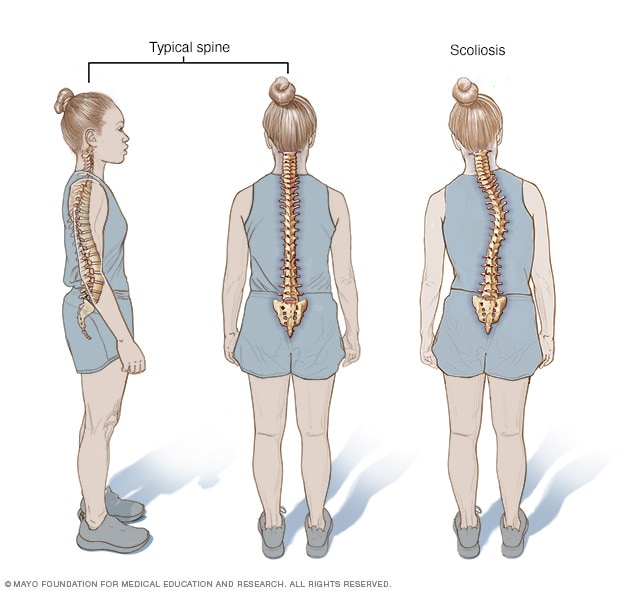
What Causes Adult Degenerative Scoliosis?

Image source: mayoclinic.org
Degenerative scoliosis is the curving of spine caused by the degeneration of the facet joints and the discs. This usually occurs to people over 65 years old.

Facet joint deterioration is similar to the causes of osteoarthritis. However, degenerative scoliosis causes a straight spine to shift. Because of this, the spine curves to just one side.

When scoliosis is discovered after puberty, it is already considered adult scoliosis. Its causes are different from that of scoliosis detected at an earlier age. Scoliosis in adults can be caused by other spinal conditions that affect the vertebrae. For instance, osteoporosis, osteomalacia (bone softening), or bone degenerations, could be the culprits. Adult scoliosis can also appear after a major spinal surgery.

Image source: linkedin.com
Degenerative adult scoliosis begins as a back pain. The degeneration occurring in the spine causes the curve to form. Those experiencing the condition could feel numbness, pain, and weakness in the lower back and leg portions of the body. In some cases, patients experience difficulty walking due to the pressure on the spinal nerves.

Surgery is not always the first option to treat adult degenerative scoliosis, but it can be required if the pain is severe or if the patient is experiencing breathing problems. Other treatment options include bracing, physical therapy, and medication for pain management.

Dr. Joseph Yazdi is a neurosurgeon with years of expertise in treating chronic spine conditions like failed back syndrome, scoliosis, and spinal fusion. Learn more about spinal injuries and other related medical issues by visiting this blog.


Wednesday, May 4, 2016

How Spinal Cord Stimulation Compares with Other Pain Management Options

Also known as dorsal column stimulation, spinal cord stimulation provides an alternative means of pain management that could offer results when other procedures, particularly surgery, prove ineffective. In addition, the procedure is frequently sought for peripheral neuropathy, reflex sympathetic dystrophy, arachnoiditis, and causalgia.


Image source: medtronic.com

The entire procedure is minimally invasive, with an implant placed in the spine or just under the skin close to the affected region. The implant releases a current, controlled through a handheld device, which creates a pleasant sensation while blocking the pain signals of the affected nerves. 

Spinal cord stimulation offers a drug-free approach to pain management, relying instead on electricity to manage pain. This avoids many of the risks associated with using medications for chronic pain management (especially in the case of particularly risky drugs), particularly the tolerance that builds up over time when drugs are taken orally. Because it is comparatively minimally invasive, the treatment also exposes the patient to less risks than another attempt at surgery. 

In addition, unlike most surgical implants such as targeted drug delivery, spinal cord stimulators are first installed as a trial before being replaced by a more permanent system. Lasting about a week, the trial takes 20 minutes to install and is used to determine the efficacy of the treatment. It is also easily removable when proven ineffective or deemed no longer necessary.


Image source: webmd.com
As with many treatments, there are contraindications to spinal cord stimulation such as systematic infection, pregnancy and lactation, sensitivity to transcutaneous electrostimulation, and pacemaker use. In addition, the procedure is limited in its effectiveness, with only between 50 and 60 percent of patients reporting efficacy of pain reduction. Moreover, being only a means of systematic relief, it does not address the source of the pain itself; it is therefore often given only after surgery or physical therapy had been tried. 

Joseph Yazdi, MD, is a neurosurgeon specializing in chronic pain management through spinal cord stimulation and other minimally invasive surgical techniques. For more on this and other procedures involving the vertebral column and spinal cord, visit this blog.